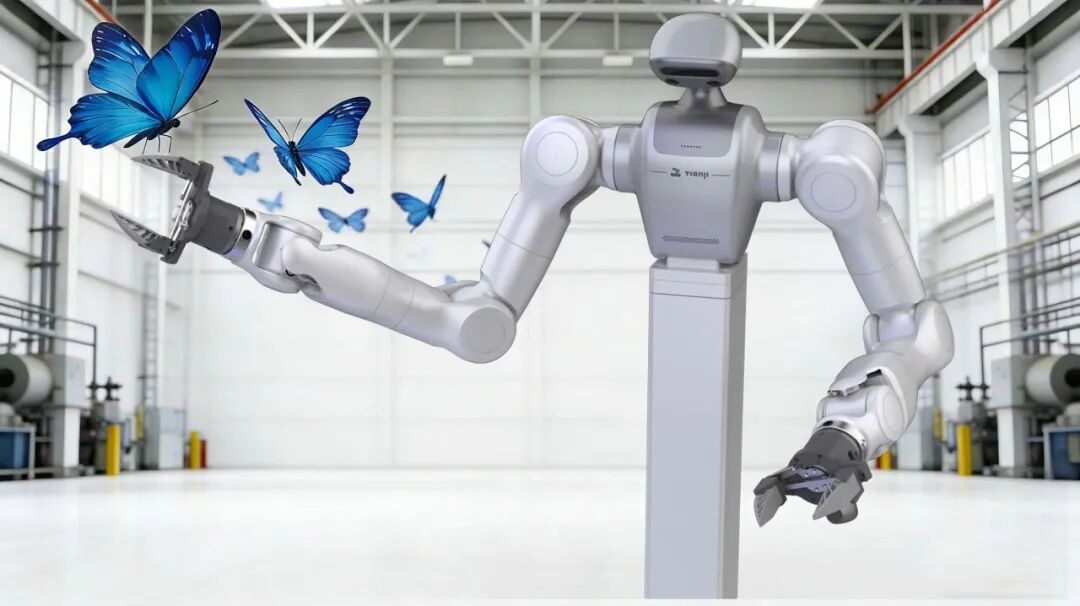
Tendo Intelligence: Defining the Industry Standard for Force-Controlled Humanoid Dual Arms and the Next-Generation Embodied Intelligence Platform
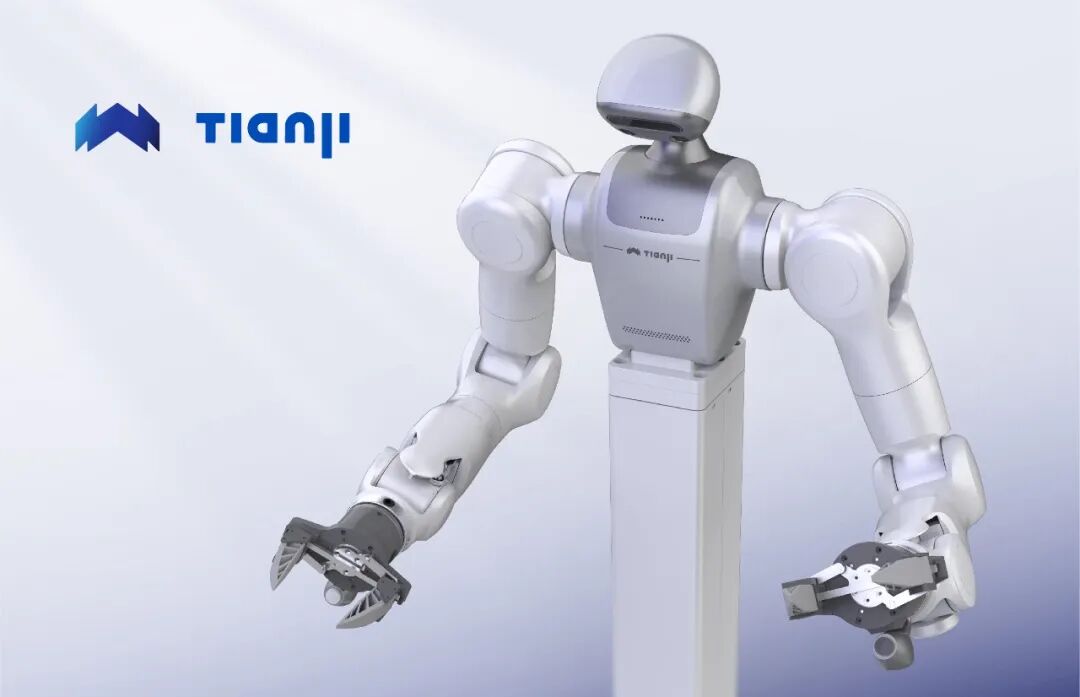
April 2024: Launched the world’s first force-controlled humanoid arm.
2025: Mass-produced the world’s first force-controlled humanoid dual-arm system, delivering over 2,000 units within just four months—making it the first brand to achieve mass production and delivery that year, with the largest shipment volume.
2026: Orders have already surpassed 10,000 units.
With its core technology and leading delivery data, Tendo Intelligence is proving it stands at the very forefront of the force control field.
03. Five Core Parameters That Define “Industrial-Grade” Force Control Precision
Having grown from deep roots in industrial robotics, Tendo Intelligence understands the vast chasm between “conceptual specifications” and true “industrial-grade precision.”
Tendo’s five core parameters in force control technology all stand at the industry’s forefront:
-
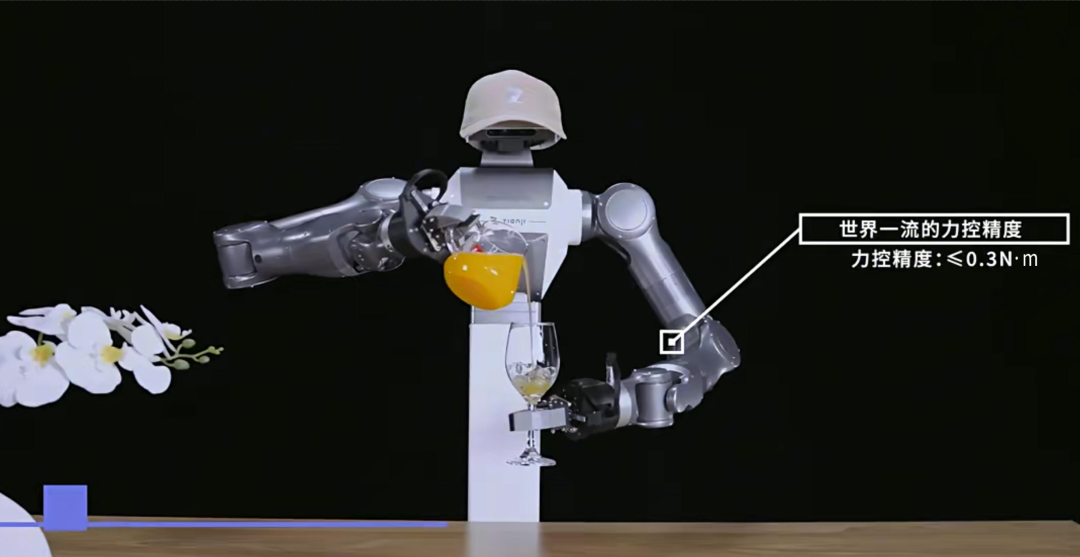
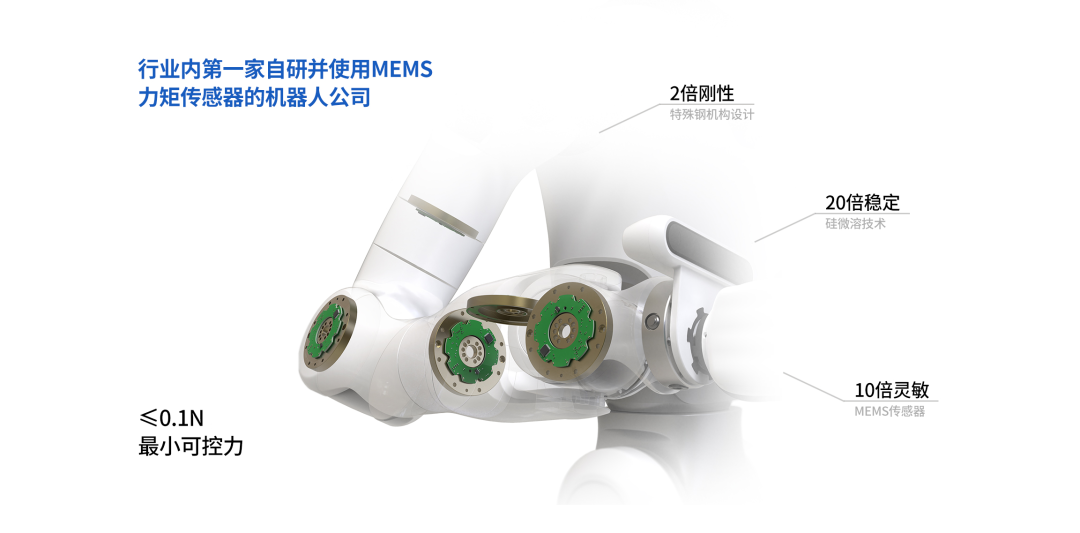
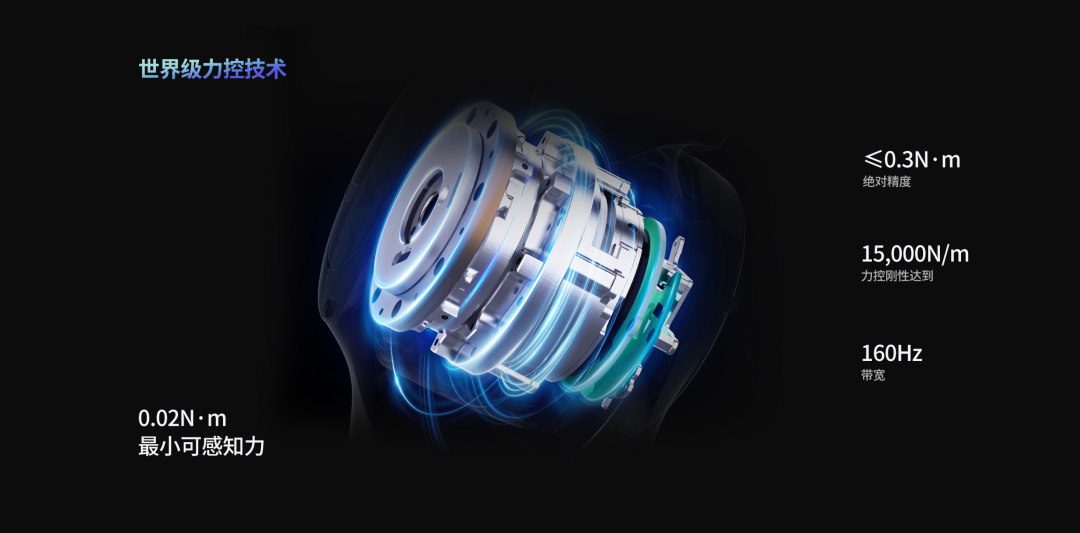
Joint Force Control Absolute Accuracy ≤ 0.3 N·m: This enables the robot to perceive the firmness of a single strawberry.
-
Force Control Translational Stiffness of 15,000 N/m: Far exceeding the industry average, this ensures high tracking accuracy even under heavy payload operations.
-
Joint Module Torque Resolution ≤ 0.01 N·m: In precision assembly scenarios, the robot operates with the delicacy of a surgeon.
-
Joint Module Torque Loop Bandwidth up to 160 Hz: The highest level in the industry, achieving millisecond-level responsiveness.
-
Repeatability of ±0.03 mm, Absolute Accuracy of 1 mm: Delivers industrial-grade precision even within a novel anthropomorphic configuration and lightweight design.
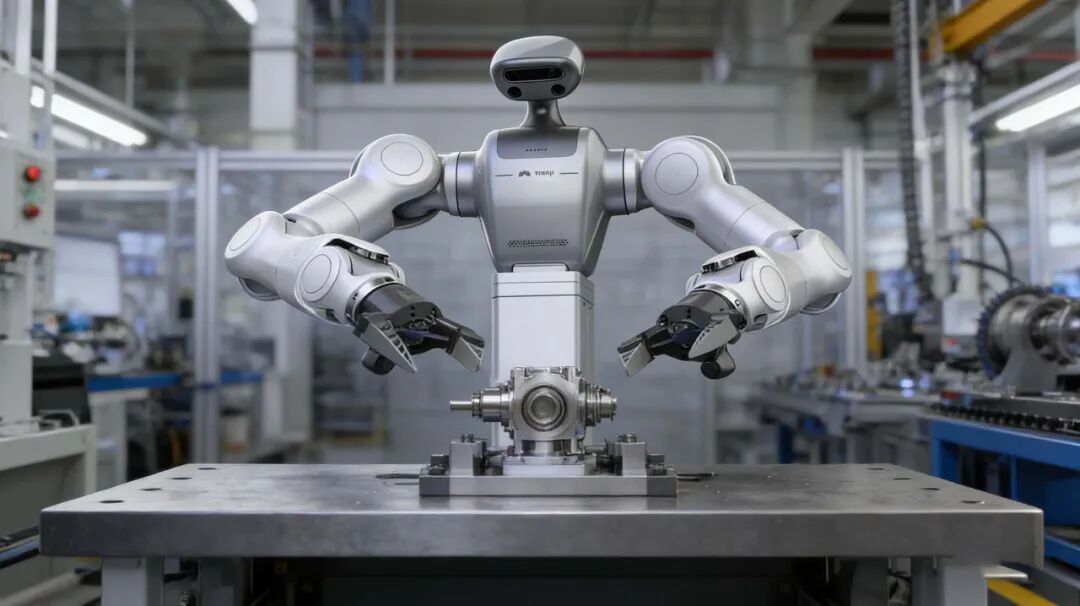
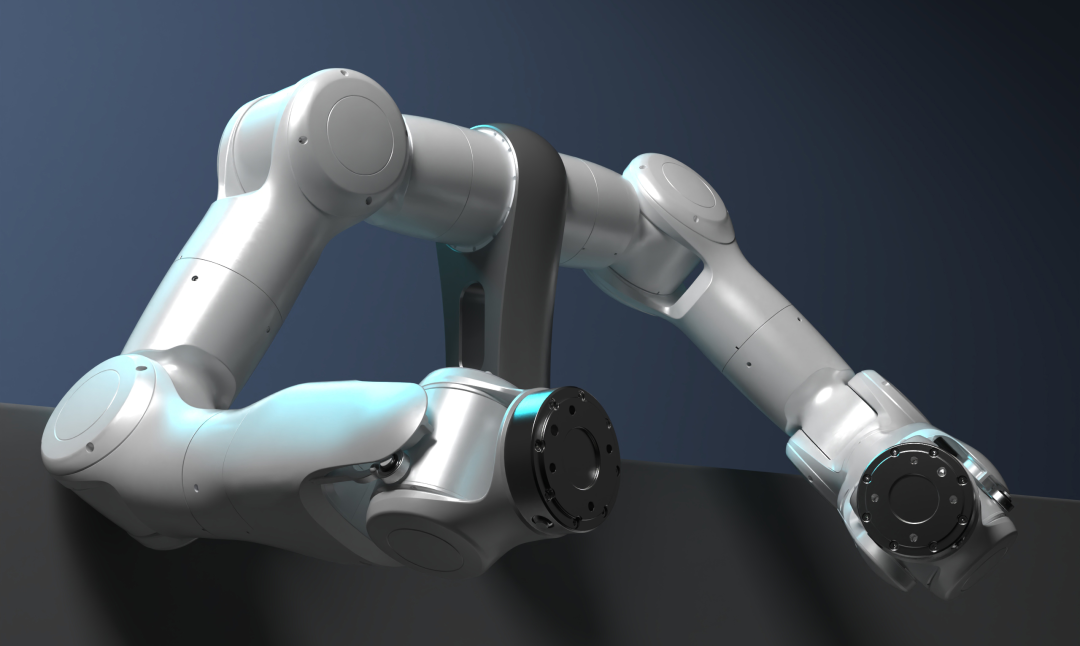
Tendo achieves this through integrated joint design and extreme material optimization: the motor, reducer, and sensor are all consolidated into a single module, significantly reducing the weight of connectors and structural components.
At its core, lightweight design is about enabling humanoid robots to exist as a more “reasonable presence within human environments”—to truly enter homes and achieve widespread adoption.
06. Product Matrix: From 5 kg to 50 kg Payload, Covering Full-Spectrum Application Needs
As the industry definer of force-controlled humanoid dual arms, Tendo extends far beyond a single product offering, delivering a comprehensive product matrix:
-
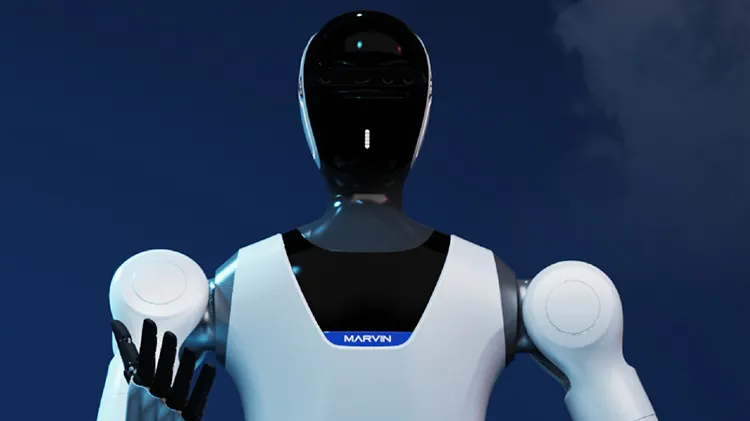
Marvin M6-Lite: Self-weight 8 kg, rated payload 5 kg. An ultimate lightweight design with a sleek, minimalist aesthetic.
-
Marvin M6: Self-weight 11.5 kg, rated payload 6 kg. Delivers industrial-grade precision for demanding applications. Also available in variants with 800 mm and 900 mm arm lengths.
-
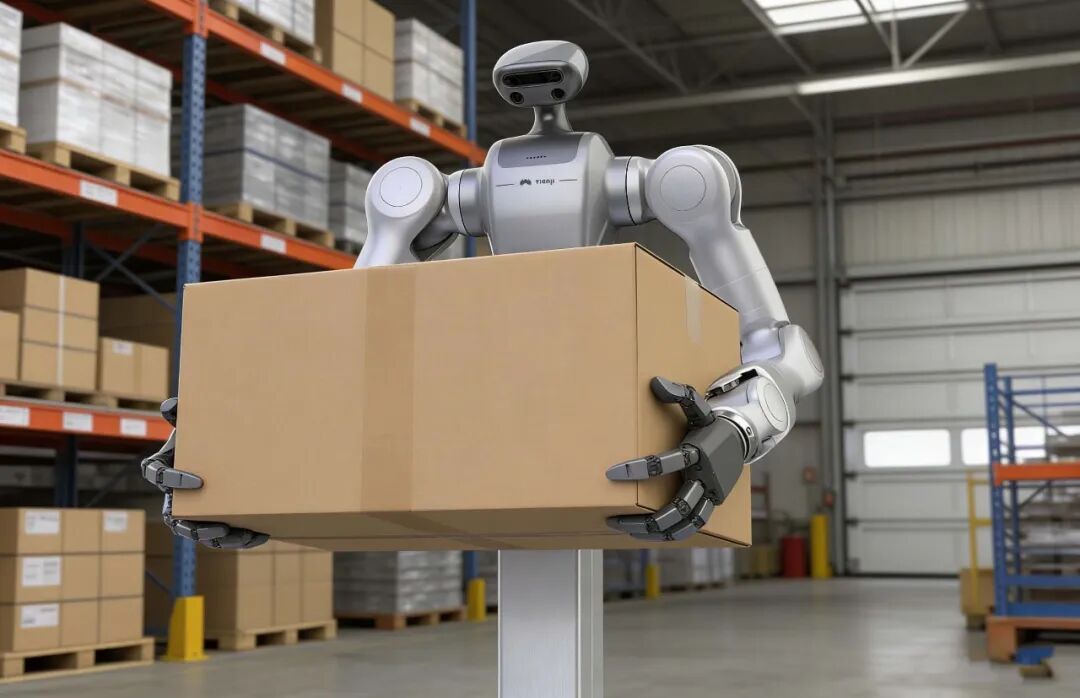
Marvin M20: Self-weight 30 kg, single-arm rated payload 20 kg, maximum dual-arm coordinated payload of 50 kg. Engineered for heavy-load material handling scenarios. Also available in a 16 kg payload variant with a 1400 mm arm reach.
Furthermore, Tendo has introduced the Marvin Pro—a fixed, high-precision dual-arm teleoperation and data acquisition platform. It comes standard equipped with three head-mounted cameras and two wrist-mounted cameras, powered by the Nvidia Jetson Orin AGX 64G. It fully supports ROS2 and the KernelMind-Apex VR teleoperation system, streamlining and simplifying the model training process like never before.
07. Teleoperation Technology and Motion Control: Delivering a Complete Solution for Embodied Intelligence
Tendo is far more than a hardware manufacturer of force-controlled dual arms; the company has also established deep technical expertise and a leading edge in the realms of teleoperation technology and motion control.
Tendo’s low-latency teleoperation and data acquisition system empowers customers to efficiently capture high-quality, real-world physical interaction data—including visual imagery, joint poses, and force/torque feedback. This capability is critically essential for training embodied large models.
In both software and hardware design, Tendo delivers a comprehensive, end-to-end solution:
Fusion Motion Control Interface
Tendo opens up all motion control parameters—position, force, and stiffness—as standardized APIs, allowing customers to invoke them as easily as snapping together building blocks. When an AI model commands “gently pick up the apple,” the operator simply sends an instruction such as “low-stiffness mode + 2N force limit,” and the Fusion system automatically translates this into precise motor torque control parameters.
Single-Board Dual-Arm Control Architecture
Tendo features a built-in dual-arm coordination controller on a single motherboard. This enables customers to directly invoke high-level commands without the need to develop complex low-level algorithms from scratch—a concentrated demonstration of Tendo’s profound technical capabilities in motion control.
Rich SDK and Development Toolkits
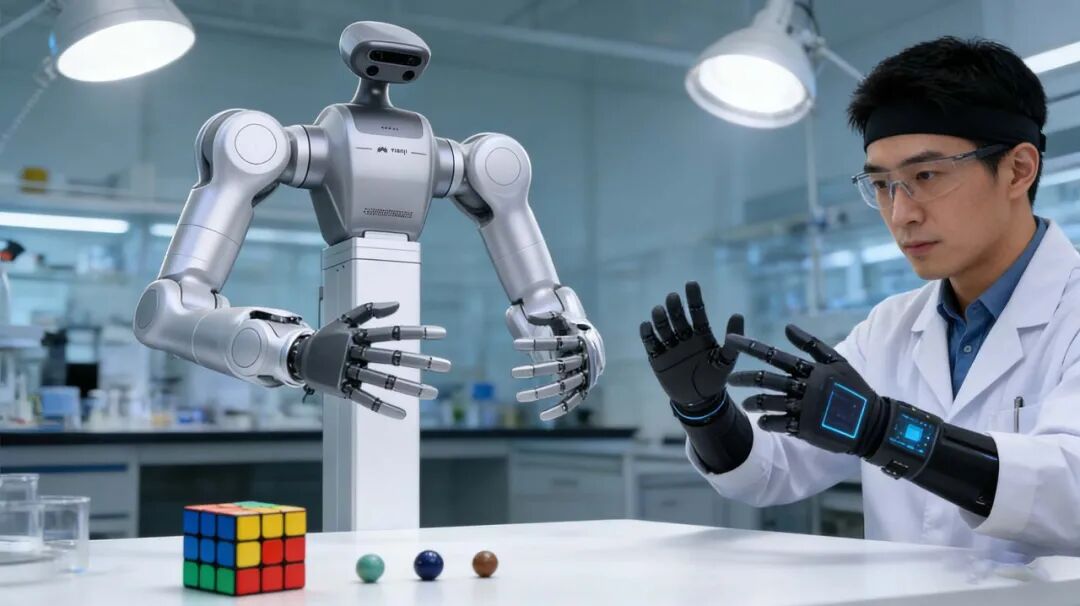
Tendo supports multiple development environments, including Python, C++, and ROS. The low-latency teleoperation platform allows customers to remotely operate robots using master-slave devices, capturing high-quality datasets essential for training AI models.
KernelMind-Apex VR Teleoperation System
The Marvin Pro comes standard-equipped with the KernelMind-Apex VR teleoperation system, supporting immersive remote operation. It allows operators to control the robot’s dual arms as intuitively as they would their own hands, dramatically enhancing both operational efficiency and the quality of data acquisition.
The convergence of these technical capabilities enables Tendo to deliver far more than high-performance “limbs.” The company provides a complete “cerebellum” solution—spanning motion control algorithms, teleoperation systems, data acquisition, and model training. Tendo has constructed a fully integrated, closed-loop technological ecosystem.
08. Real Deliveries, Not Concept Products: Dominant Sales Figures with a Commanding Lead
In the embodied intelligence industry, concepts abound, yet genuinely deployed products remain exceedingly rare.
Tendo’s distinct advantage lies in this: rather than starting from scratch with conceptual slideware, the company extends naturally into humanoid robotics from a foundation of reliability already rigorously validated in industrial settings.
Tendo has shared with Lebang Robot that as of March 2026, its sales data reflects a decisive and commanding lead over its peers:
-
Over 2,000 force-controlled humanoid dual-arm units delivered within just four months in 2025, serving 100 customers—making it the first brand to achieve mass production and delivery that year, with the largest shipment volume.
-
Orders for 2026 have already surpassed 10,000 units.
-
Cumulative shipments of industrial collaborative arms exceed 30,000 units, serving over 1,000 industrial customers.
Based on publicly disclosed sales information aggregated from multiple enterprises, this pace and scale of delivery ranks first globally among comparable products.
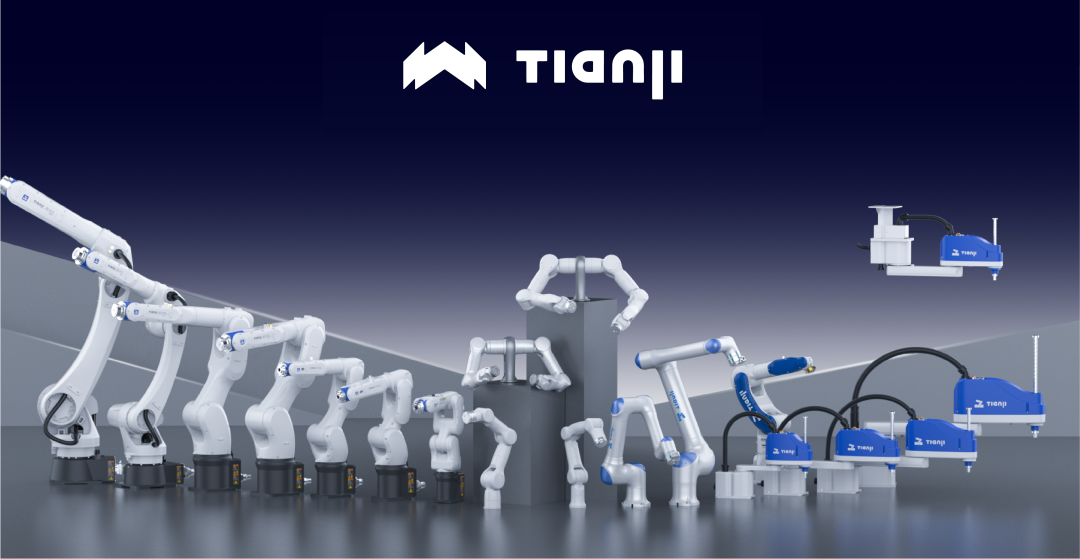
These figures reflect Tendo’s deep accumulated expertise in the industrial sector and the genuine recognition of its customers.
In assembly and precision handling scenarios, what customers value most is typically not “doubled speed,” but rather three core priorities:
-
Stability: Can it run continuously? Can it operate across multiple shifts?
-
Consistency: Is the yield rate more stable? Are fluctuations minimized?
-
Total Cost of Ownership: Particularly hidden costs associated with training, line changeovers, rework, and downtime.
In essence, the value delivered by force-controlled humanoid arms is best captured in a single phrase: “reducing uncertainty.” When uncertainty is mitigated, improvements in both yield and production cadence follow naturally.
09. Why Is Force Control So Critically Important?
The essence of embodied intelligence is enabling intelligent agents to act gracefully within the physical world.
While large AI models address the challenge of “cognition,” the challenge of “execution” in the physical realm remains formidable. The Sim-to-Real gap causes many algorithms that perform flawlessly in simulated environments to falter upon contact with reality.
Large models output discrete, high-level commands (e.g., “pick up the apple”), whereas servo motors require continuous, high-frequency current instructions. What is missing is an intermediary—a “cerebellum” —responsible for real-time planning, force feedback control, and postural balance.
Tendo’s Fusion motion control system is precisely the “cerebellum” that fills this critical void. With a force control precision of 0.02 Nm, it is capable of receiving high-level instructions from large models and translating them into exquisitely refined physical actions.
In 2026, companies possessing mature “cerebellum” technology and teleoperation capabilities will prove even scarcer and more strategically valuable than those owning the large models themselves.
10. The Capabilities and Commitment of an Industry Definer
From its industrial foundations to its humanoid future, Tendo Intelligence’s technological and product evolution has consistently centered on addressing real-world application demands.
Tendo is not merely selling hardware; it is actively defining the technical standards for force-controlled humanoid dual arms. From MEMS force sensors to integrated joints, from dual-arm coordination algorithms to teleoperation systems, and from motion control interfaces to open development platforms, Tendo is fundamentally reshaping the technical coordinate system of this entire field.
For 2026, Tendo Intelligence’s objective is clear and unwavering: to further solidify its standing as the “Premier Brand in Force-Controlled Humanoid Dual-Arm Robotics.” The company aims to affirm its absolute leadership in the force control domain through its dominant technological prowess and commanding sales figures.
The Tendo story is still being written. Yet, from technology to product, from orders to volume deliveries, and from the domestic market to global supply chains, every step Tendo has taken has been remarkably swift. And based on currently visible metrics—be it delivery volume, product specifications, customer profile, or technical architecture—the company has already demonstrated a rare degree of certainty in this competitive arena.
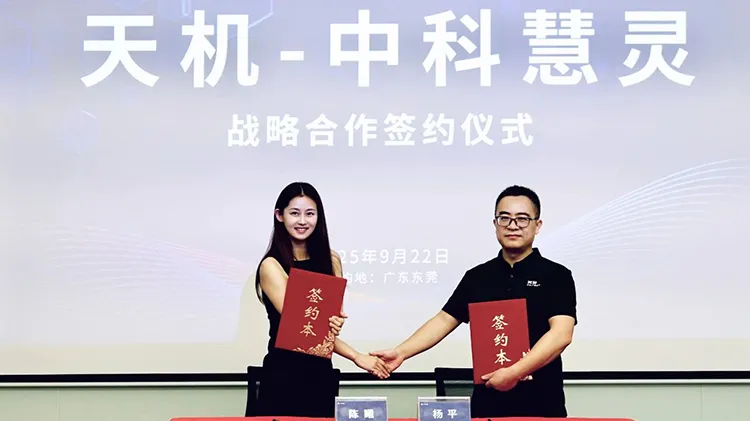
Beyond these extreme performance parameters and market penetration, Lebang Robot observes that Tendo benefits from a unique and noteworthy industrial foundation. Its two principal stakeholders bring distinct legacies: Yaskawa Electric, a premier global manufacturer of industrial robots with a century of expertise in motion control; and Everwin Precision, a core precision manufacturing supplier within the Apple and Tesla supply chains, possessing a consumer-electronics-grade mass production quality control system.
This dual heritage ensures that Tendo’s products are engineered from inception to the most rigorous industrial standards, and it likely provides several identifiable structural supports:
First, Everwin Precision’s manufacturing infrastructure offers consumer-electronics-grade production ramp-up capabilities—an asset that most startups cannot easily replicate in the short term.
Second, Tendo possesses deep technical in the field of industrial collaborative arms, bolstered by a cumulative shipment record exceeding 30,000 units and an established base of over 1,000 industrial customers. Its supply chain management and after-sales service systems have been thoroughly refined through prolonged operation in industrial settings.
Third, its positioning in force control products enables Tendo to address the spillover demands and customer networks of both major stakeholders, affording a broader reach. It can effectively serve both industrial enterprises and embodied intelligence companies, with stable and predictable volume requirements.
This industrial backdrop may well be a key reason—beyond sales figures and technical strength alone—why Tendo merits renewed and careful consideration.